
 Image 1 of 3
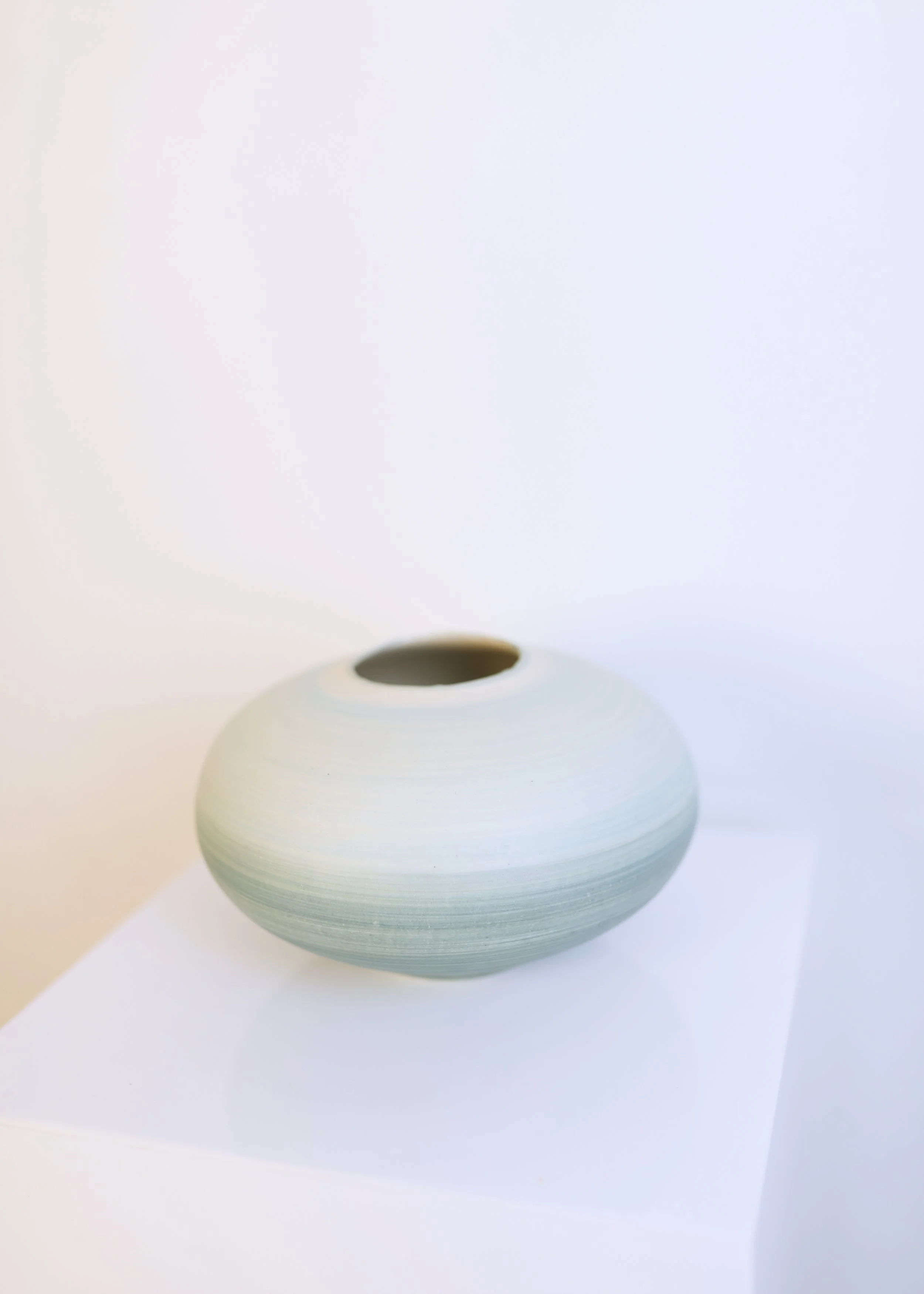 Image 2 of 3
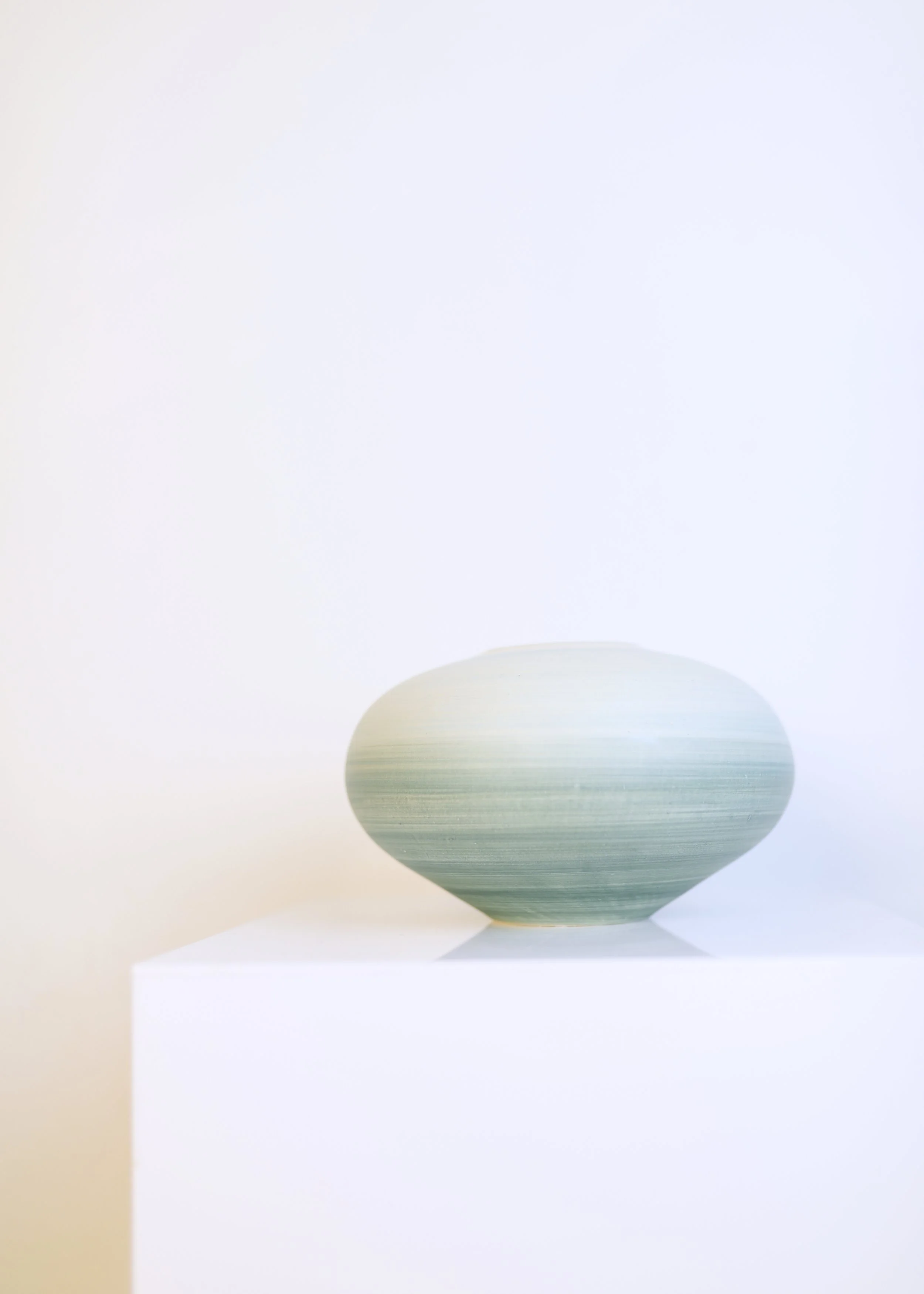 Image 3 of 3
Clay & Terra Sig
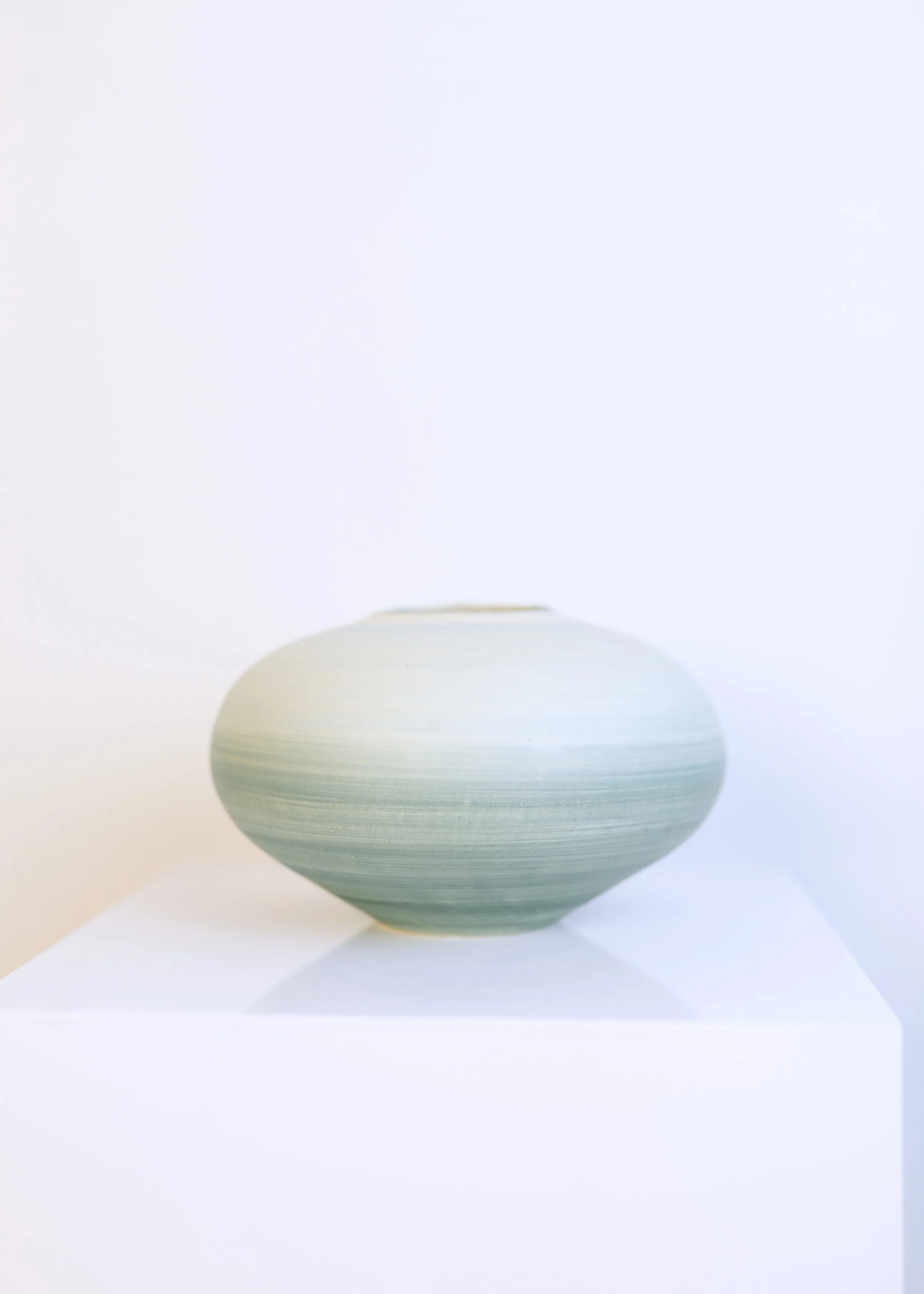
13×20cm
The Shore that Held Us
Emigrating to Australia four years ago, the Northern Beaches provided a vital reset for our nervous systems and a new way to live. This body of work uses rounded, organic ceramic forms to evoke the feeling of being held and grounded while establishing new roots here.
Each protective shape reflects the seascapes on the coastline that anchored us during a major life transition. The forms use the belly as a horizon line, a foundation for perspective and composition. They represent the foundations of our daily rhythms: watching dawn break from Shelly Head, walking North Head’s bush tracks, greeting friends at Manly Cove and teaching our daughter to swim at Fairlight.
For me, after years of witnessing difficult situations in the humanitarian sector, it was here, between the grit of the sand and the rhythm of the Pacific, that a literal grounding happened. These pieces are a testament to the landscape that held us when we needed it most.
I am an immigrant to Australia, yet I am often afforded the label of "expat." I navigated my emigration with the unearned safety of white privilege, keenly aware that the warm welcome I received is a stark contrast to the experience of many who are thrown from their home by conflict or climate change. To call myself an immigrant is an act of solidarity and a rejection of the "less-than" status often imposed on those who do not look like me.
Clay & Terra Sig
13×20cm
The Shore that Held Us
Emigrating to Australia four years ago, the Northern Beaches provided a vital reset for our nervous systems and a new way to live. This body of work uses rounded, organic ceramic forms to evoke the feeling of being held and grounded while establishing new roots here.
Each protective shape reflects the seascapes on the coastline that anchored us during a major life transition. The forms use the belly as a horizon line, a foundation for perspective and composition. They represent the foundations of our daily rhythms: watching dawn break from Shelly Head, walking North Head’s bush tracks, greeting friends at Manly Cove and teaching our daughter to swim at Fairlight.
For me, after years of witnessing difficult situations in the humanitarian sector, it was here, between the grit of the sand and the rhythm of the Pacific, that a literal grounding happened. These pieces are a testament to the landscape that held us when we needed it most.
I am an immigrant to Australia, yet I am often afforded the label of "expat." I navigated my emigration with the unearned safety of white privilege, keenly aware that the warm welcome I received is a stark contrast to the experience of many who are thrown from their home by conflict or climate change. To call myself an immigrant is an act of solidarity and a rejection of the "less-than" status often imposed on those who do not look like me.